Why Your Summer Routine is Wrecking Your Eyes: 5 Surprising Truths from an Optometrist
Summer should feel like a relief. But for many of my patients—and for me personally—it is often the most challenging season of the year. I’m Steve Dando, a clinical optometrist, but I also live with meibomian gland dysfunction. I’ve undergone Intense Pulsed Light (IPL) and Low-Level Light Therapy (LLLT) to manage my own condition, so I know first-hand that dry eye isn’t a theory you read about; it’s a reality that can quietly "gang up" on you. When heat, fans, and constant air conditioning combine, they create a perfect storm that relentlessly attacks the ocular surface.
1. The Air Conditioning "Double-Cross"
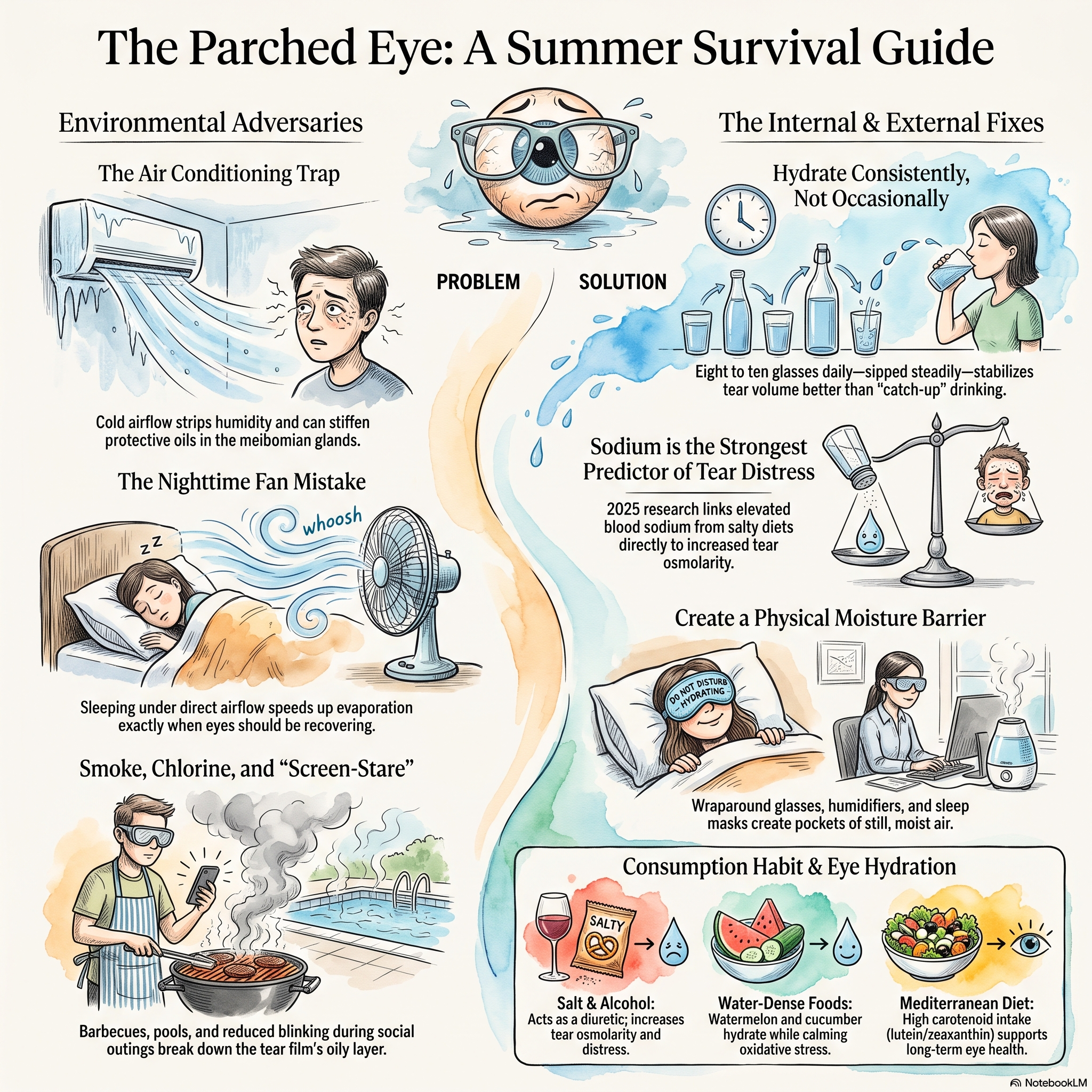
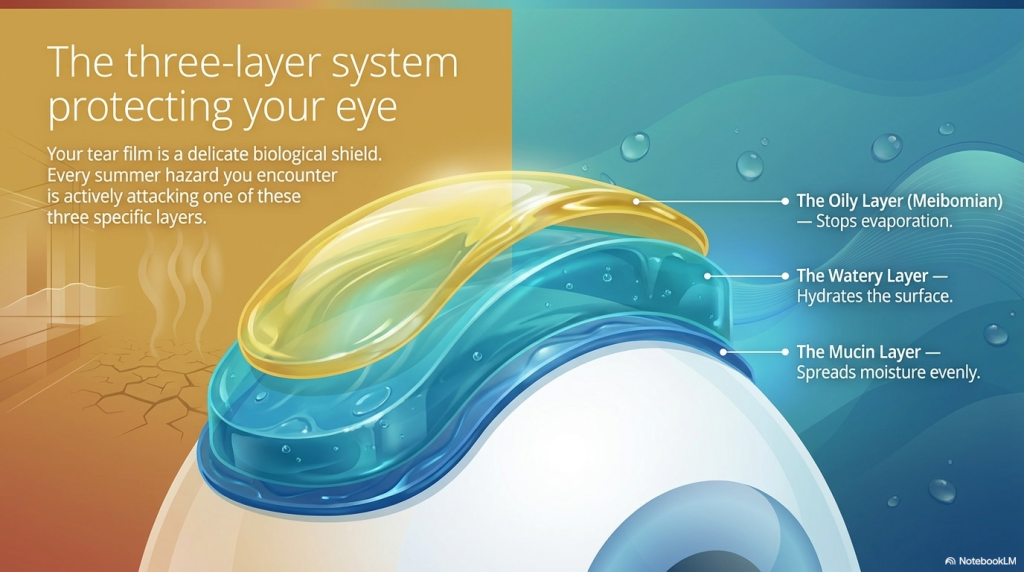
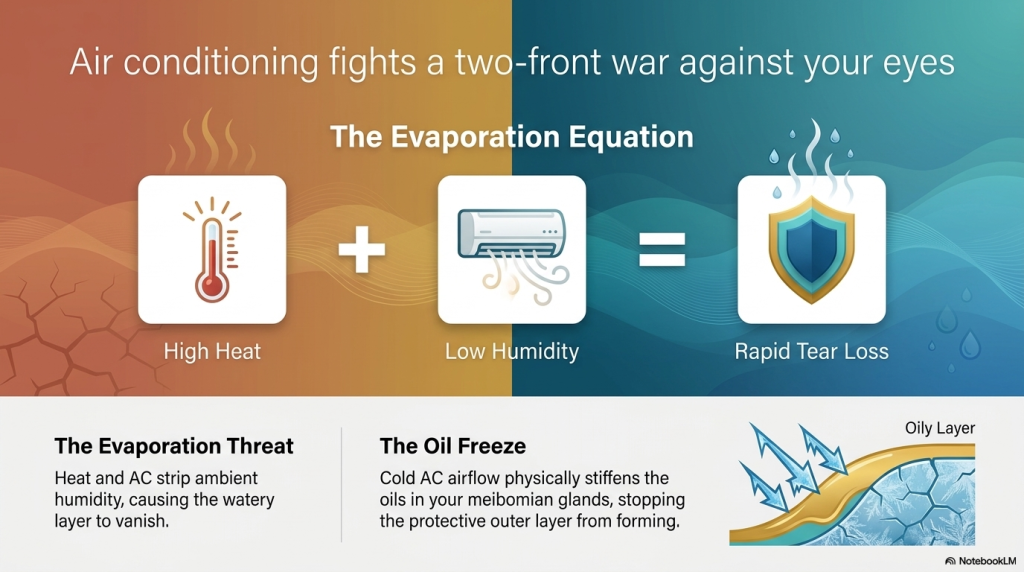
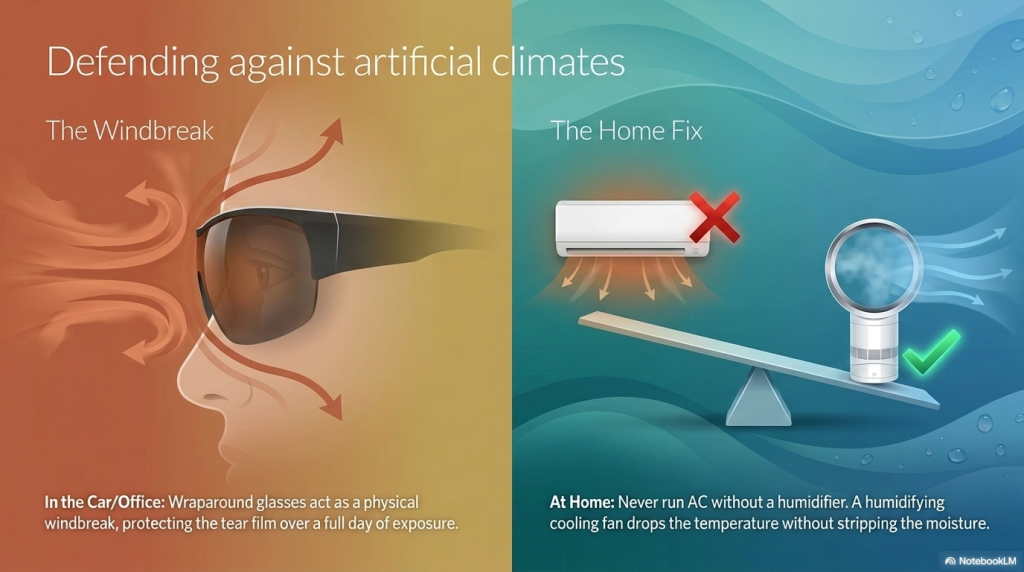
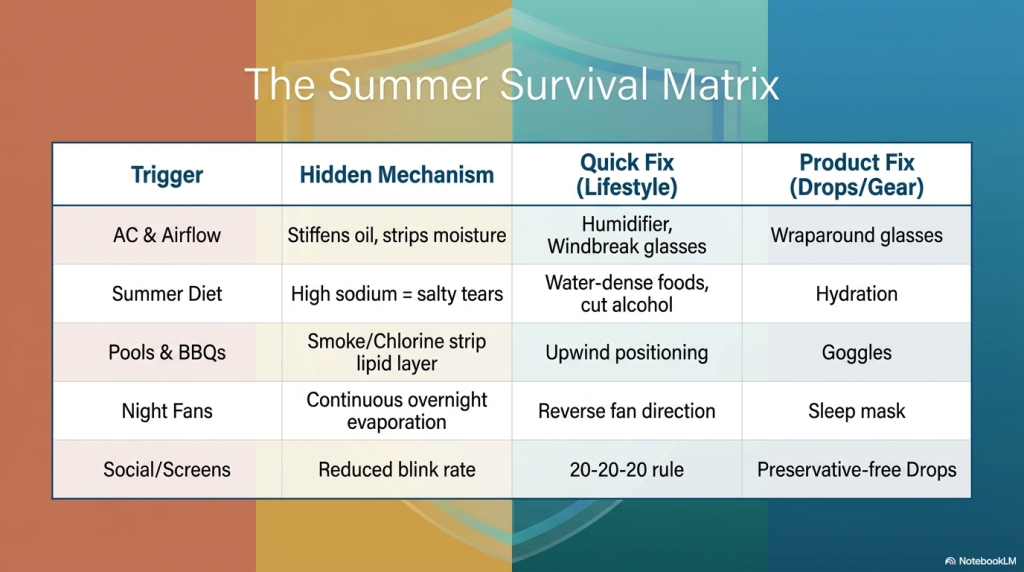
Air conditioning is usually the first thing we reach for in a heatwave, but it is often the primary culprit behind worsening symptoms. Your tear film is a sophisticated three-layer system: a mucin layer that allows tears to spread evenly, a watery middle layer for hydration, and an oily outer layer that prevents evaporation. AC attacks this system from two directions. First, it strips essential humidity from the air, causing the watery layer to evaporate faster. Second, cold AC airflow can actually "stiffen" the oils in your meibomian glands, preventing that protective oily layer from forming at all. In my clinic at Dry Eye Yorkshire, I often see the damage caused by this "double-cross." If you spend your day in an AC-heavy office or car, I recommend wearing wraparound glasses as a medical windbreak. Most importantly, never run your AC in isolation; pairing it with a humidifier is one of the simplest ways to restore the moisture balance your eyes crave. "Dry eye is a condition you live with and adjust for, not one you switch off." — Steve Dando, MCOptom
2. Your BBQ Habits are Changing Your Tear Chemistry
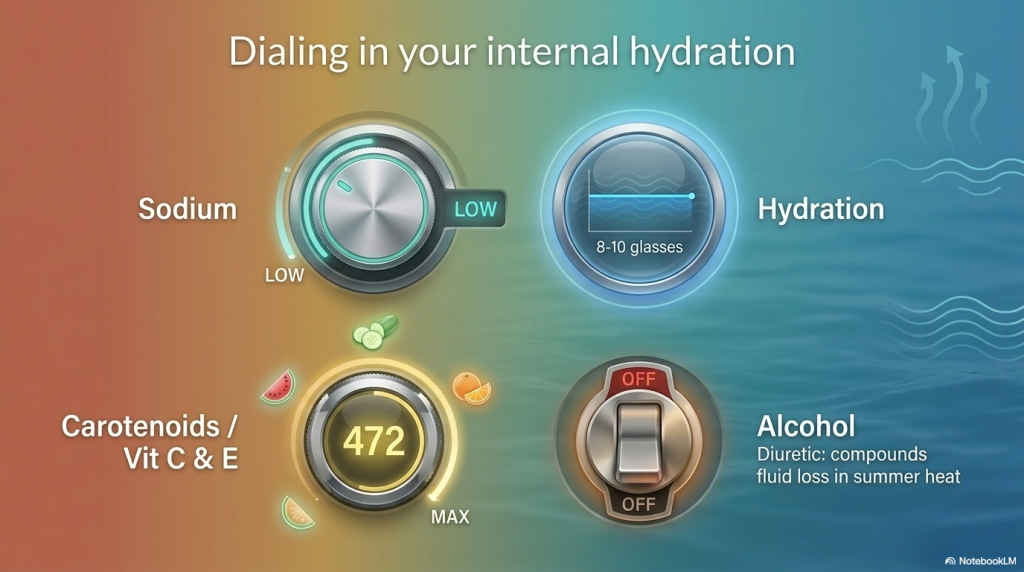
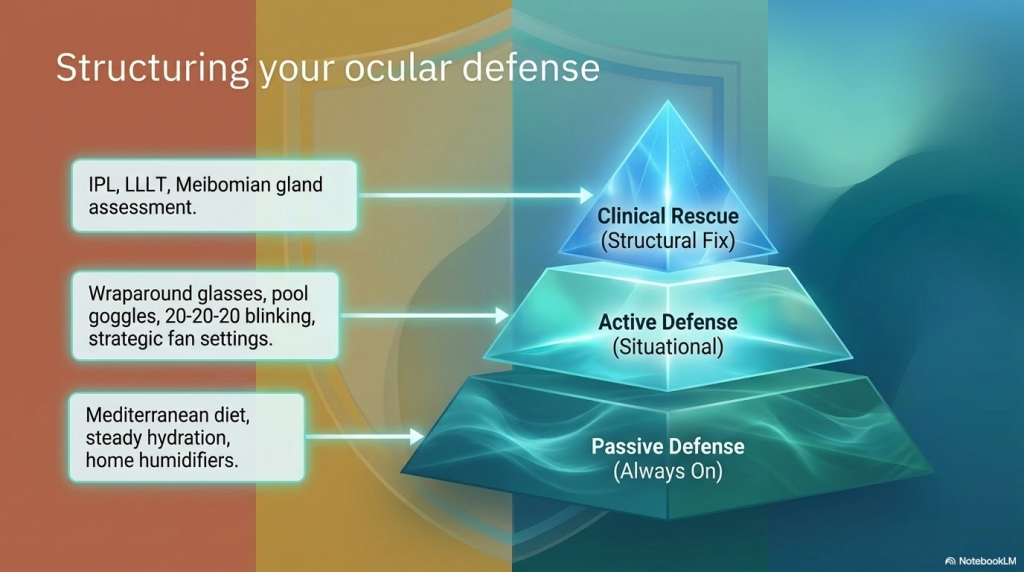
Patients are often shocked to learn that summer diet directly dictates how well the eyes hold onto moisture. A landmark 2025 study by Mustafa and colleagues found that elevated blood sodium (salt intake) is actually the single strongest independent predictor of tear distress and high tear osmolarity. A salty barbecue diet doesn't just make you thirsty; it fundamentally changes your tear chemistry. To combat this, I follow a strict Mediterranean diet. I recently had my carotenoid score tested, and it came back at 472 , reflecting a high intake of the fruit and vegetable antioxidants—like lutein and zeaxanthin—that I use to manage my own ocular health.
Summer Dietary Habits to Adopt:
- Slash the Salt: Avoid high-sodium processed meats to keep your tear osmolarity in check.
- Consistent Hydration: Drink 8–10 glasses of water steadily throughout the day to stabilize tear volume.
- Water-Dense Foods: Incorporate watermelon, cucumbers, and oranges to provide hydration and oxidative stress relief.
- Antioxidant Richness: Focus on colourful produce to boost your carotenoid levels.
- Limit Alcohol: As a diuretic, alcohol makes it harder for your body to produce tears, an effect magnified by the summer heat.
3. The "Invisible" Surface Strippers (Smoke and Chlorine)
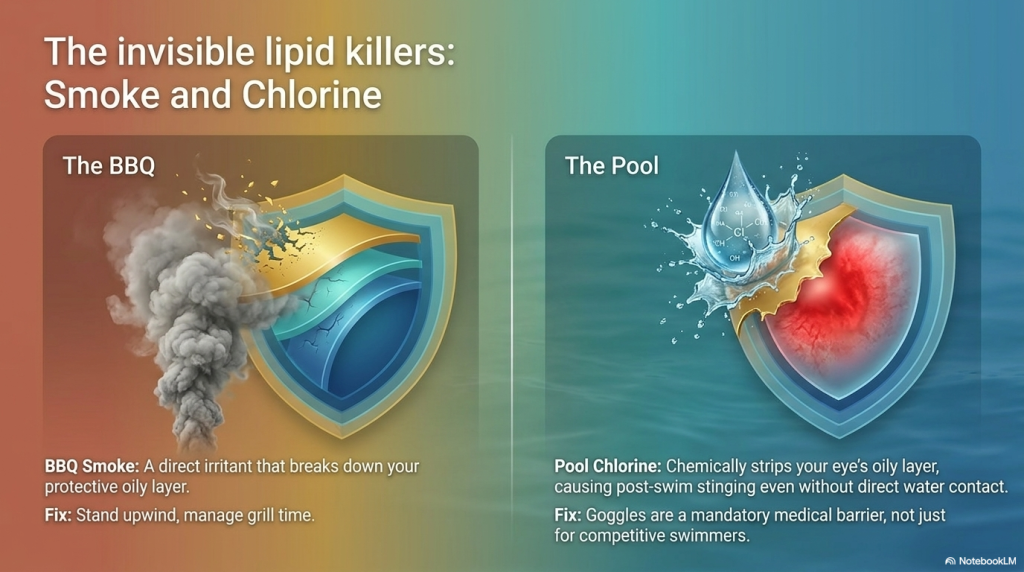
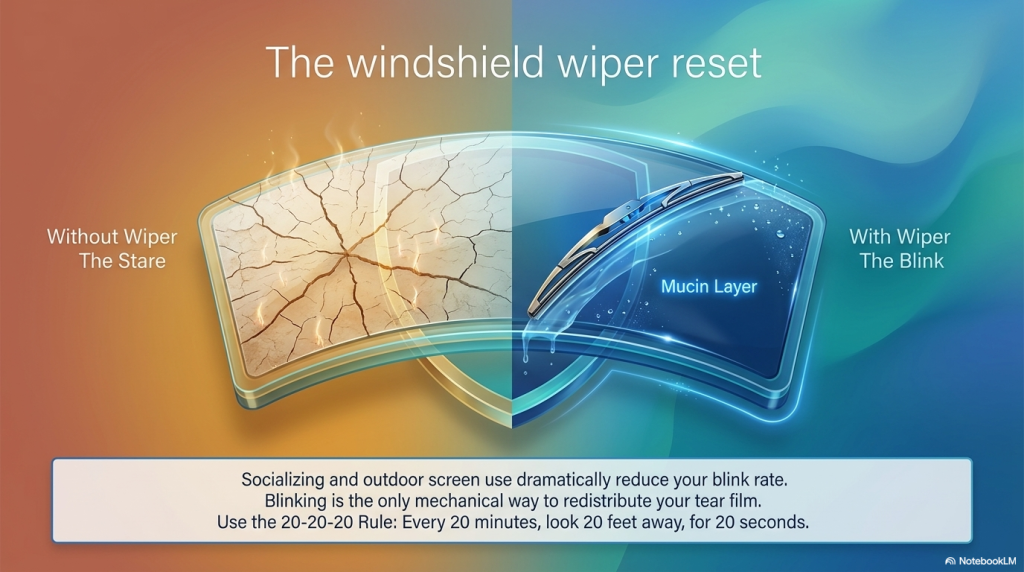
BBQ smoke and pool chlorine are "surface strippers" that break down the oily layer of your tear film. Smoke is a direct irritant that causes immediate breakdown, while chlorine is so aggressive that it can strip away your protective oils even if you don't get water directly in your eyes—simply standing near a heavily chlorinated pool can trigger discomfort. Goggles and wraparound glasses are not just accessories; they are genuine medical barriers for anyone wanting to enjoy the outdoors without the "gritty" price tag. The 20-20-20 Rule: Your Eyes' Social Lifeline During social outings or outdoor screen use, we often forget to blink. Blinking is the only way to redistribute the mucin and oily layers across your eye. To prevent "staring-induced" dryness, follow the 20-20-20 rule: every 20 minutes, look at something 20 feet away for at least 20 seconds and forcibly blink several times. This simple habit is vital for maintaining moisture during busy summer days.
4. You’re Likely Using Your Fan Wrong
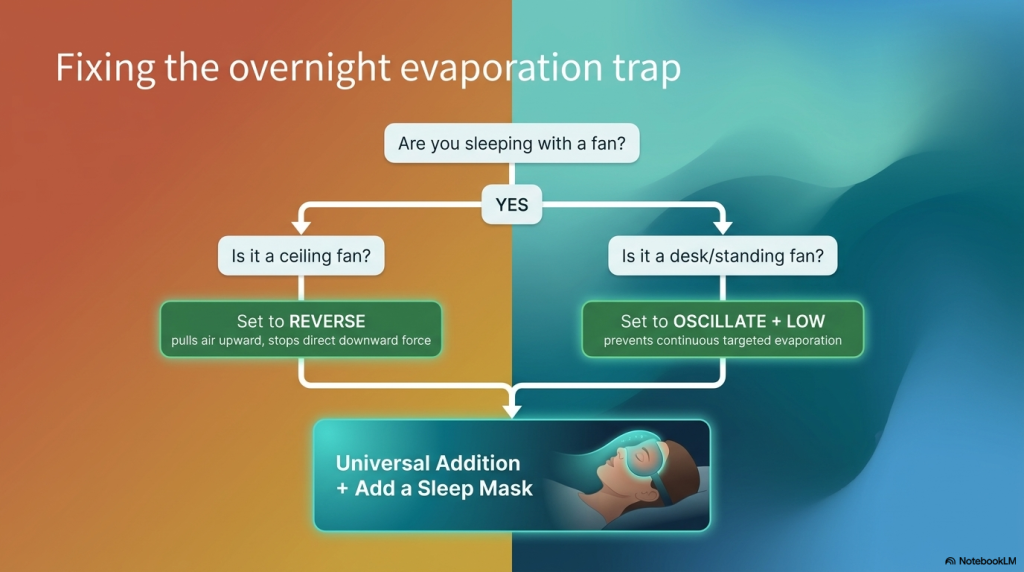
Pointing a fan directly at your face while you sleep is a recipe for a painful morning. Constant airflow speeds up evaporation during the night—the very time your eyes depend on a sealed environment to recover. Because we don't blink while we sleep, moisture retention depends entirely on the environment." At home, I run a Dyson Cool humidifying fan rather than a plain fan or standard AC unit—it cools the room without stripping the moisture out of the air." — Steve Dando, MCOptom
Professional Fan Hacks:
- Reverse Ceiling Fans:
- Set them to the reverse setting to pull air upward, circulating the room without a direct downdraft.
- Oscillate Standing Fans:
- Use the lowest setting and ensure the fan moves constantly rather than pointing at your head.
- The Sleep Mask Trick:
- A simple sleep mask creates a pocket of still, moist air around the eyes, acting as a shield against evaporation.
5. Maintenance Over "Miracle Cures"
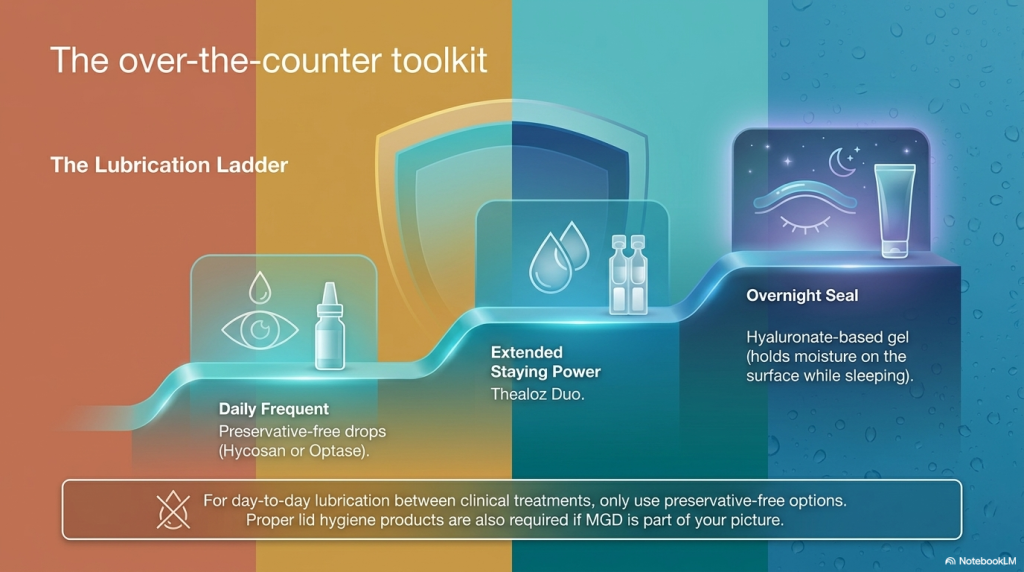
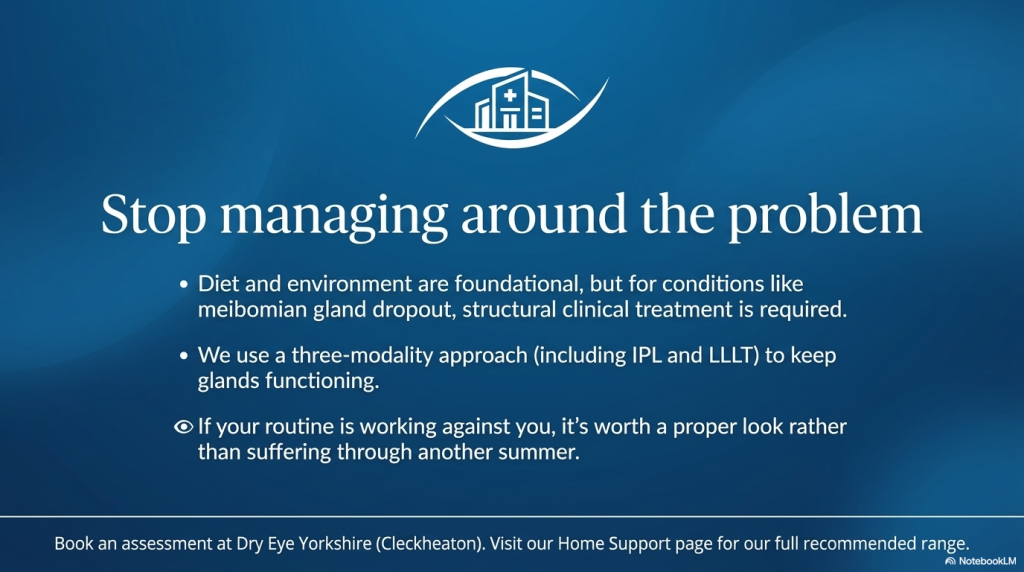
While lifestyle changes are the foundation, chronic issues like meibomian gland dropout often require clinical intervention. At our clinic in Cleckheaton, we use a three-modality approach including IPL and LLLT to keep the glands functioning. For daily maintenance, I recommend preservative-free lubricants such as Hycosan , Optase , or Thealoz Duo (which offers excellent staying power).
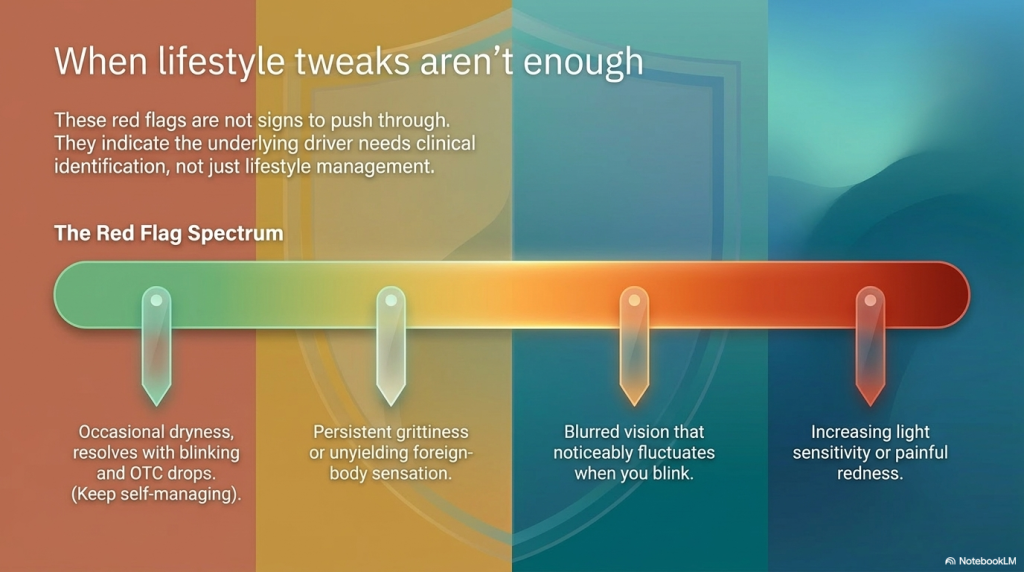
When to See a Specialist (Red Flags):
- Persistent grittiness or a "foreign-body" sensation that won't go away.
- Blurred vision that fluctuates every time you blink.
- Increasing light sensitivity or painful redness.
Conclusion: Is Your Routine Working Against You?
Most summer eye issues are genuinely fixable through small environmental shifts. Whether it’s adjusting a fan, lowering your salt intake, or pairing your AC with a humidifier, these changes can transform your comfort. As you navigate the heat, ask yourself:
Is your daily routine working for your eyes, or against them?
If you’ve made these adjustments and are still struggling, it’s time for a professional clinical assessment.