Preservatives in Eye Drops — Why They Matter for Dry Eye
Not all eye drops are equal. The preservatives in many over-the-counter drops can make dry eye worse with regular use — and most patients have no idea.
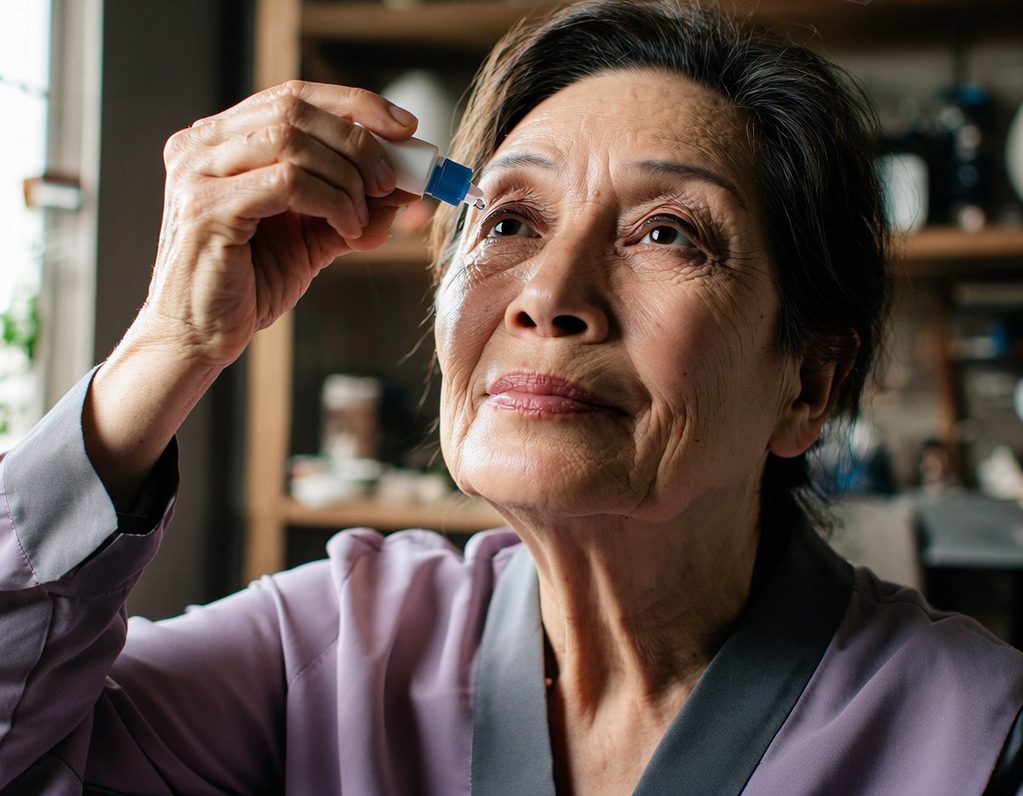
Why some eye drops contain preservatives
Eye drops sold in multi-dose bottles need a preservative to prevent bacterial contamination of the bottle contents between uses. Without preservatives, a multi-dose bottle would become a reservoir for bacteria within days of opening.
The most widely used preservative in eye drops is benzalkonium chloride — commonly abbreviated to BAK.
The problem with BAK
BAK is effective as a preservative. It is also toxic to the ocular surface epithelium — the cells lining the cornea and conjunctiva — at the concentrations used in many eye drop formulations.
With occasional use this toxicity is manageable. The ocular surface recovers between doses and the preservative effect outweighs the cellular damage.
With frequent use — as is common in dry eye patients who may be using drops multiple times daily — the cumulative toxic effect becomes significant. BAK damages the goblet cells that produce the mucin layer of the tear film, disrupts the epithelial barrier, and promotes ocular surface inflammation. In other words, regular use of BAK-containing drops in a patient with dry eye can actively worsen the underlying condition.
This is a significant and widely underappreciated problem. Patients prescribed or buying multi-dose drops for dry eye are often using them frequently enough that the preservative is contributing to their ongoing symptoms.
Preservative-free alternatives
Preservative-free eye drops are available in single-dose unit vials — small plastic ampoules each containing a single application. Because the vial is used once and discarded, no preservative is needed.
Some manufacturers have developed multi-dose preservative-free systems using specialised bottle technology that prevents bacterial contamination without chemical preservatives. These are a convenient middle ground for patients who find unit vials impractical.
Preservative-free drops are the appropriate choice for:
- Patients using drops more than four times per day
- Patients with significant ocular surface disease
- Patients with known sensitivity to preservatives
- Contact lens wearers — many preserved drops cannot be used with lenses in
- Any patient using drops long term
Other preservatives
BAK is the most studied and most problematic preservative, but others are used in eye drop formulations:
Purite and Polyquad — newer preservatives designed to be less toxic to the ocular surface than BAK. They break down on contact with the eye into harmless components. Better tolerated than BAK in most patients but still not appropriate for very frequent long-term use.
SofZia — used in some glaucoma drops, designed to minimise ocular surface toxicity.
If you're using preserved drops and experiencing ongoing ocular surface irritation, the preservative may be contributing — worth discussing at your assessment.
Practical guidance
- Check the label of any eye drops you're currently using for BAK or other preservatives
- If you're using drops more than three to four times daily, switch to preservative-free unit vials
- If you wear contact lenses, use only drops specifically labelled as compatible with contact lens wear
- Don't assume that an expensive or branded drop is preservative-free — check the ingredients
We'll review your current drops at your assessment and advise on appropriate alternatives if needed.