Contact Lens Care & Dry Eye — Looking After Your Lenses and Your Eyes
How you care for your contact lenses matters as much as which lenses you wear. Poor lens care habits can significantly worsen dry eye symptoms — and risk more serious complications.
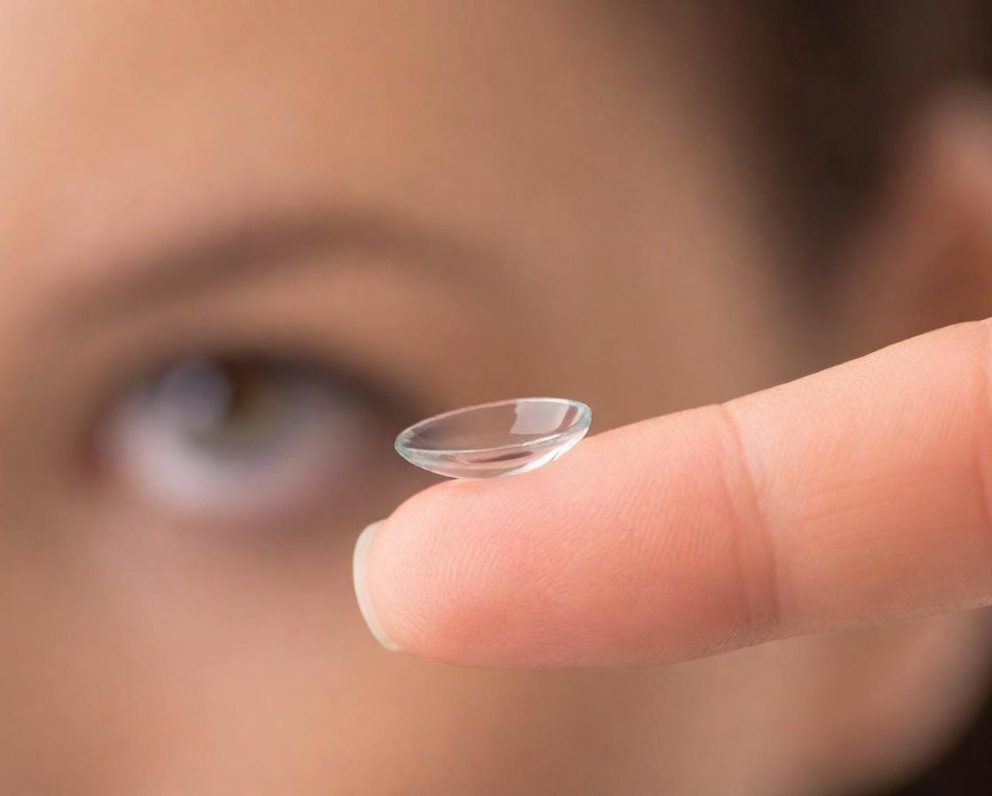
The lens care and dry eye connection
Contact lens care solutions, lens cases, and wearing habits all influence the ocular surface environment. Even patients wearing excellent lenses in an appropriate replacement schedule can experience significant ocular surface problems if their lens care routine is suboptimal.
Lens care solutions
Multipurpose solutions Most reusable contact lens wearers use a multipurpose solution for cleaning, rinsing, disinfecting, and storing lenses. Many multipurpose solutions contain preservatives — most commonly polyquaternium or polyhexamethylene biguanide (PHMB) — that can accumulate on lens surfaces and cause ocular surface irritation, particularly in patients with existing dry eye or sensitive eyes.
Hydrogen peroxide-based systems — where lenses are neutralised in a special case before insertion — are preservative-free and generally better tolerated by patients with dry eye and ocular surface sensitivity. The neutralisation step is essential and must not be skipped.
Rewetting drops during wear Using preservative-free rewetting drops compatible with contact lens wear can significantly improve comfort during the day. We'll advise on appropriate products at your assessment.
Lens cases
Lens cases are a significant and underappreciated source of contamination. Biofilm forms on lens case surfaces rapidly and is a reservoir for bacterial and Acanthamoeba contamination — both of which can cause serious ocular infections.
Lens case hygiene
- Rinse the case with fresh solution — not tap water — after each use
- Leave it open and face down on a clean tissue to air dry
- Replace the case every one to three months — or with each new bottle of solution
- Never top up solution — always empty, rinse, and refill with fresh solution
Tap water should never contact lenses, lens cases, or the eye during lens wear. Tap water contains Acanthamoeba — a microorganism that can cause a devastating corneal infection in contact lens wearers.
Wearing habits that affect dry eye
Overwearing Wearing lenses beyond the recommended daily wearing time, or using monthly lenses beyond their replacement date, increases the accumulation of deposits, bacterial load, and lens surface degradation — all of which worsen ocular surface health.
Sleeping in lenses Sleeping in contact lenses — even lenses approved for extended wear — significantly increases the risk of corneal infection and worsens ocular surface hypoxia. For dry eye patients, sleeping in lenses is particularly harmful. We'd advise strongly against it.
Wearing lenses during illness The ocular surface is more vulnerable during illness. Wearing lenses when unwell — particularly with upper respiratory infections — increases the risk of ocular complications.
Hand hygiene Thorough hand washing before handling lenses is essential. Residual hand cream, soap, or other products transferred to lenses cause immediate ocular surface irritation.
When to take lenses out
Remove lenses immediately if you experience:
- Sudden increase in redness, pain, or discomfort
- Significant reduction in vision
- Unusual discharge
- A lens that feels different — rough, dry, or uncomfortable in a way that doesn't resolve with rewetting drops
These can be signs of a corneal problem that needs prompt assessment. Don't continue wearing and hope it resolves.
The broader picture
Contact lens care is one component of managing dry eye in lens wearers. The underlying ocular surface disease — particularly MGD — needs to be addressed for comfortable long-term lens wear. Good lens care supports that treatment; it doesn't replace it.
Find out more about Contact Lens Dry Eye → Book Your Dry Eye Assessment