The End of the Antibiotic Era? How We’re Using Blue Light to Fight the Microbial Mutiny
The End of the Antibiotic Era? How We’re Using Blue Light to Fight the Microbial Mutiny
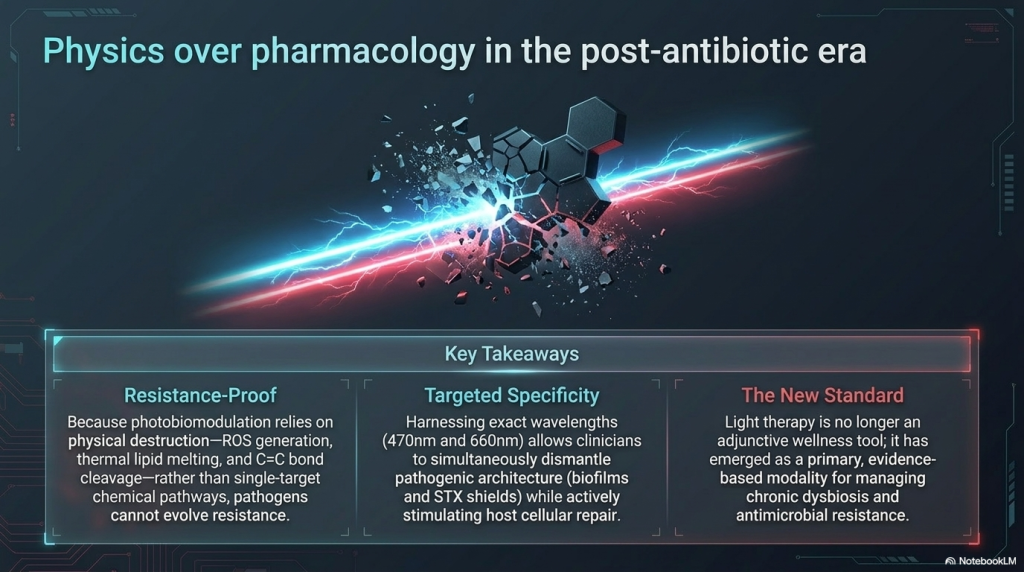
We are currently witnessing the terminal decline of the "antibiotic era." Since the mid-20th century, our overzealous reliance on antimicrobial drugs has backfired, fueling a microbial mutiny where pathogens like Methicillin-resistant Staphylococcus aureus (MRSA) have evolved faster than our chemical labs can keep up. In this post-antibiotic world, traditional medicine is hitting a wall, but a field known as Photomedicine is offering a high-tech alternative. By weaponizing specific wavelengths of blue and red light, we are moving beyond "miracle pills" to a form of bio-innovation that sounds like science fiction: using the light spectrum to dismantle superbugs at a molecular level.
The 470nm "Hammer": Why Blue Light is a Bacterial Nightmare
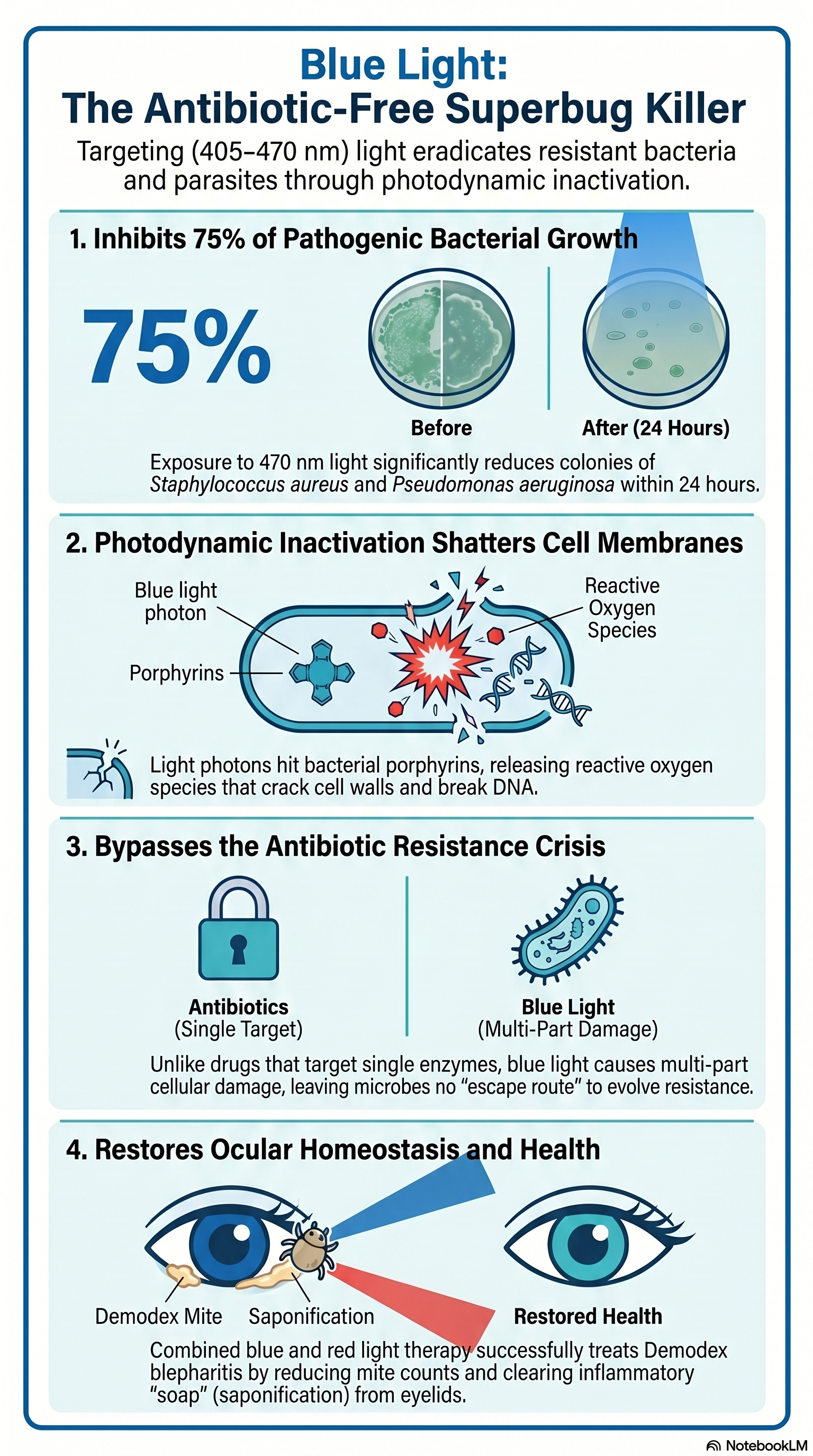
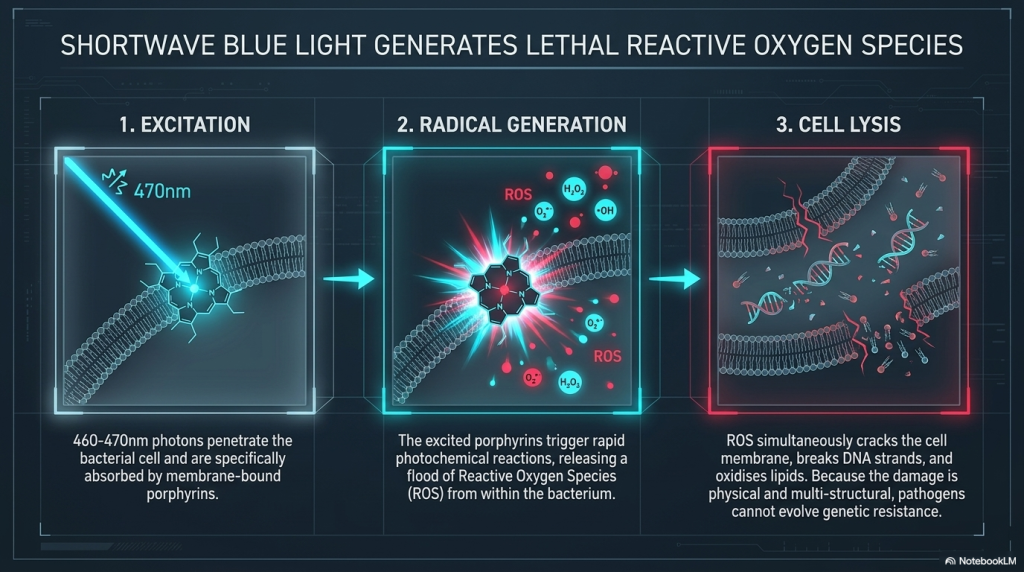
Antimicrobial blue light, particularly at the 470 nm wavelength, acts as a "molecular hammer" that microbes cannot escape. While antibiotics target specific, singular enzymes—which bacteria can easily learn to bypass through genetic mutations—blue light triggers a broad-spectrum "molecular blitz." It exploits a fundamental vulnerability: the high levels of light-sensitive molecules called porphyrins found in bacterial cells.
When blue light hits these porphyrins, it initiates a process of photo-excitation, releasing a flood of reactive oxygen species (ROS) inside the cell. As research from Harvard Medical School articulates: "reactive oxygen molecules... damage many processes and parts of cells at once. There’s no simple way for microbes to evolve an escape route."
This strategy is not just effective; it is clinically devastating. In saline environments, 470 nm light has been shown to inhibit S. aureus by a staggering 97.67%, while even the notoriously resilient P. aeruginosa sees an inhibition of 60.63%. In nutrient-rich media (BHI), both pathogens face a significant 75% growth inhibition. Crucially, this therapy is highly selective. Human cells remain safe because they contain far lower levels of porphyrins and possess superior antioxidant defenses compared to the primitive architecture of a microbe.
Stripping the "Golden Armor": The Photolysis of Staphyloxanthin
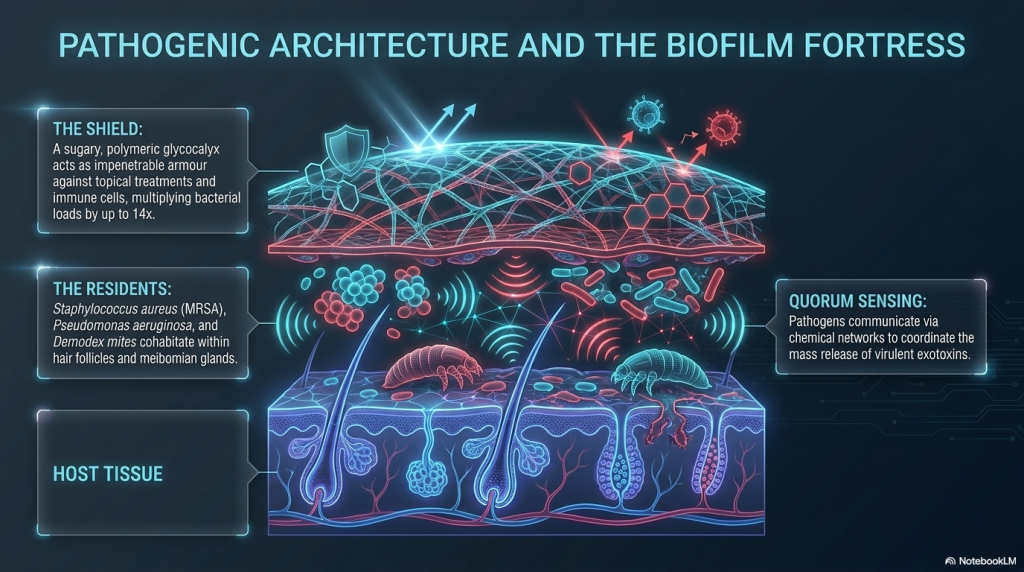
One of the most provocative discoveries in "Renegade Beauty" and clinical microbiology is the "disarming" of S. aureus. This pathogen protects itself with a golden pigment called staphyloxanthin (STX). This isn't just a cosmetic feature; it is "golden armour"—an antioxidant shield that neutralizes the reactive oxygen molecules our own immune system uses to kill invaders.
Bio-innovation has found the "sweet spot" to crack this armour: 460 nm light. Through a process called photolysis, light at this specific wavelength breaks down the C=C (carbon-carbon) double bonds within the pigment. By "photobleaching" this golden shield, we strip the bacteria of its defences. Once the pigment is bleached, the bacteria enter a "traumatized" state, becoming 80,000 times more susceptible to external attacks, such as hydrogen peroxide or the natural defences of our white blood cells. We aren't just killing the bug; we are deleting its ability to fight back.
The "Soap Factory" in Your Eyes: The Bio-Innovation Off-Switch
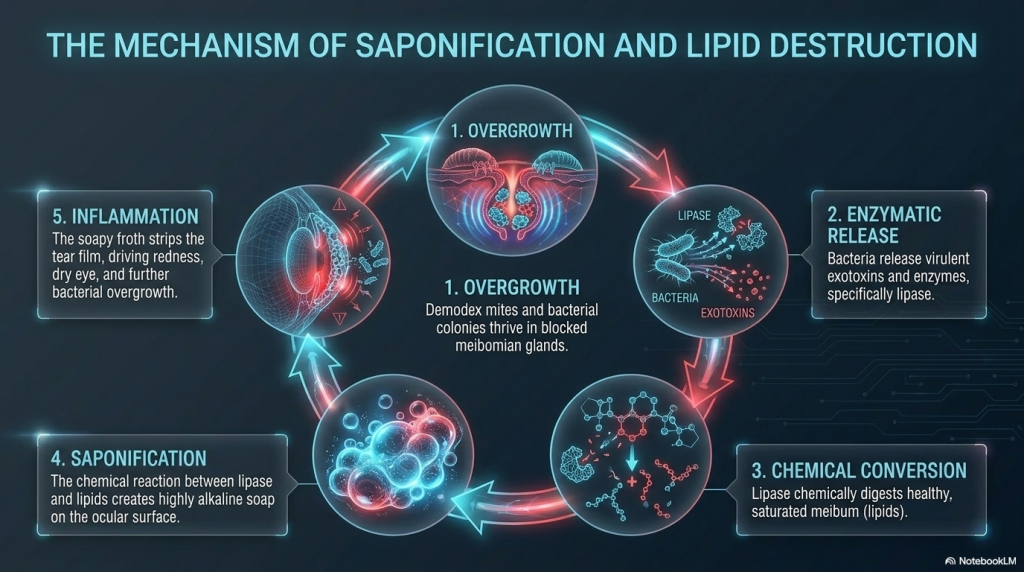
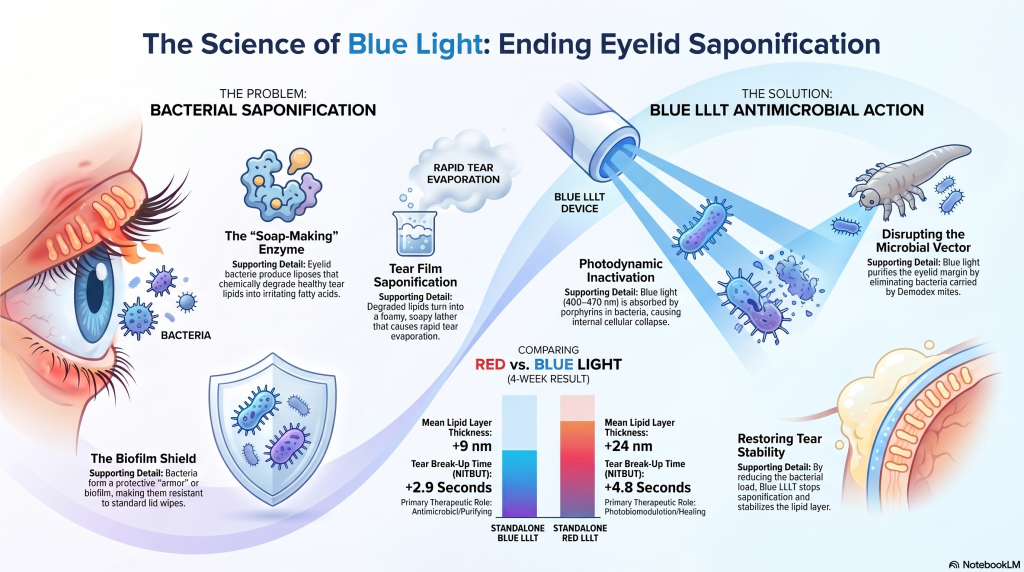
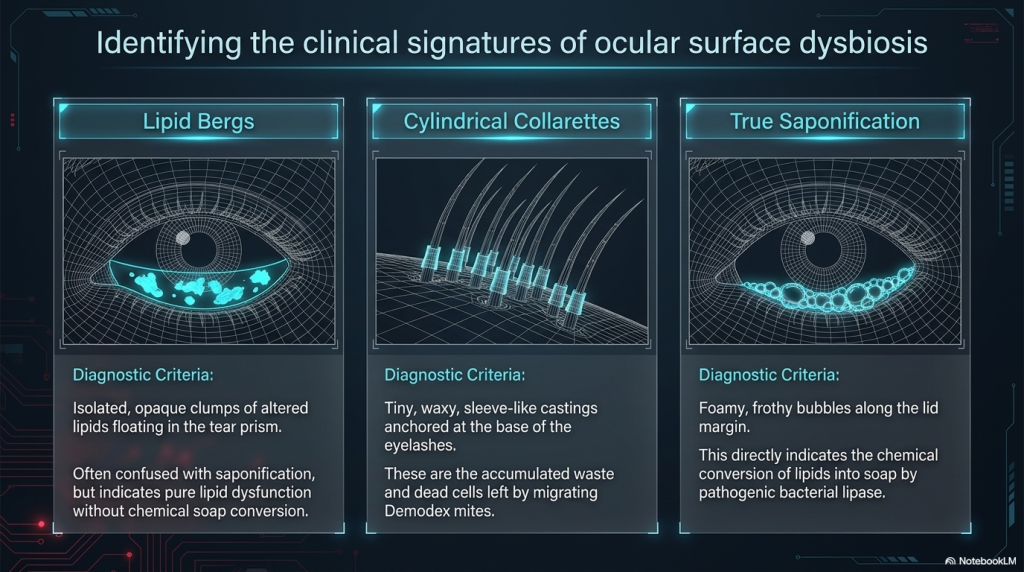
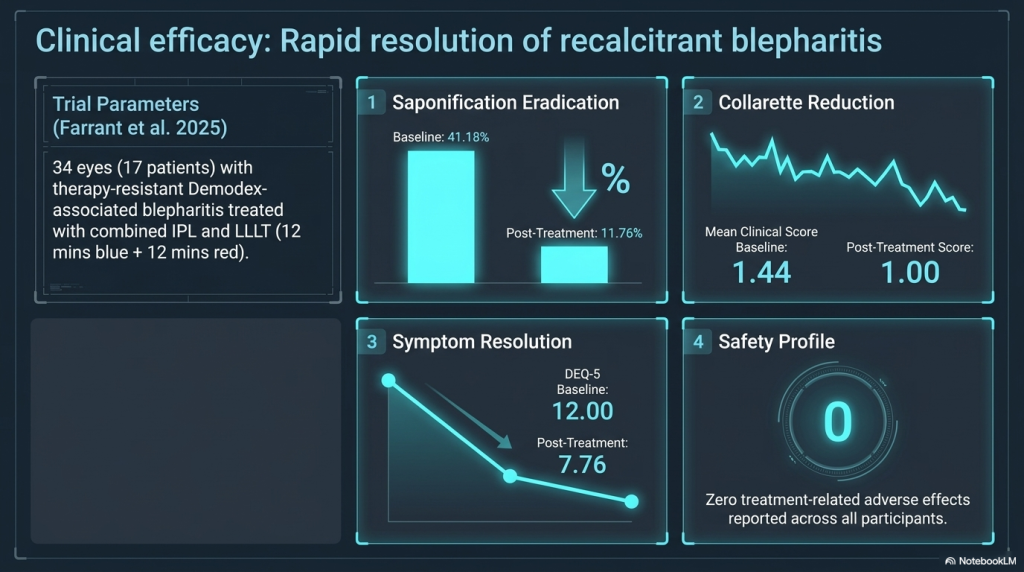
In conditions like blepharitis and Meibomian Gland Dysfunction (MGD), the human eyelid becomes a literal "soap factory." Bacteria such as Staphylococcus secrete an enzyme called lipase, which breaks down the delicate lipids in your eye’s natural oils. This chemical reaction, known as saponification, transforms your natural tear film into an alkaline soap. This is why many dry-eye sufferers notice frothy, foamy bubbles in the corners of their eyes—a biological SOS that their tear film is being chemically dismantled.
Photomedicine acts as the "off-switch" for this reaction. By utilizing the "molecular hammer" of blue light to kill the Staphylococcus colonies, we stop the secretion of lipase in its tracks. This halts the saponification process and breaks the vicious cycle of inflammation and tear evaporation. It is the ultimate shift from managing symptoms with drops to utilizing light to halt a destructive chemical process.
The Demodex Mutiny: Why Mites Love Your "Greenhouse" Pores
Our pores often fall victim to the "Pilosebaceous Greenhouse Effect." This occurs when synthetic-heavy skincare—loaded with petroleum and silicones—creates a "synthetic-shrink-wrap" or polymeric-plaque over the skin. This occlusion traps endogenous heat and creates a warm, stagnant, oil-rich niche where Demodex mites thrive.
Research shows that mite populations in reactive skin can be 15 to 18 times higher than normal.
These mites have a 14-day biological rhythm, and the real damage occurs at the end of this cycle. When the mite dies, it undergoes a "microexplosion," releasing a volatile endotoxin cocktail and bacterial debris directly into the pore. This sudden influx of "mite compost" triggers the intense inflammatory cascade and reactive heat flares we recognize as rosacea. By utilizing blue light, we can act as "Quorum Quellers," disrupting the communication and reproductive cycles of these microscopic invaders and clearing the way for a restored biological landscape.
The "Dream Team": REBEL Preliminary Results and Synergy
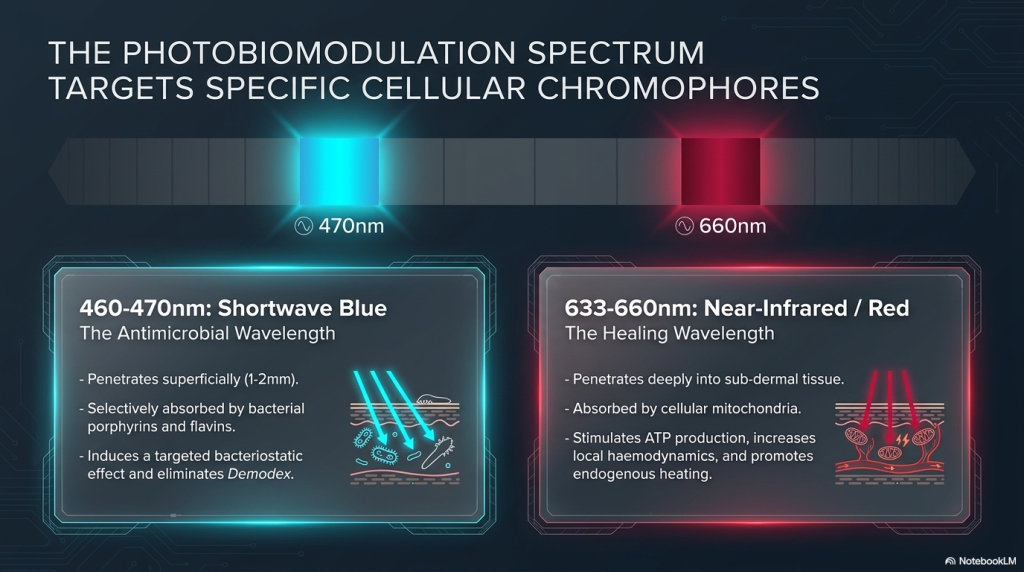
The future of bio-aesthetic health isn't just blue light (the Assassin); it is the synergy of Red and Blue (the Dream Team). Low-Level Light Therapy (LLLT) typically pairs 470 nm blue light with 630-660 nm red light to achieve dual-action results.
While blue light dismantles the microbial load and halts saponification, red light acts as the "Healer." It penetrates deeper to stimulate the mitochondria, boosting ATP production and accelerating tissue repair. The preliminary results from the REBEL study (Photobiomodulation With REd vs BluE Light) are already proving the efficacy of this combination. Early case reports compared to sham treatments show:
- Significant reduction in bacterial load.
- Improved tear film stability and increased tear meniscus height.
- A dramatic reduction in ocular surface damage (conjunctival and corneal staining).
By combining these wavelengths, we address the microbial mutiny and the host's inflammatory response simultaneously—a feat no single antibiotic can achieve.
Conclusion: A New Dawn for Bio-Aesthetic Health
We are entering an era where light is reclaiming the body’s biological balance. By moving beyond the scorched-earth policy of systemic antibiotics and the "synthetic-shrink-wrap" of modern cosmetics, we are discovering that the light spectrum provides a cleaner, more precise tool for restoration.
As we move into a post-antibiotic world, will we stop looking for the next "miracle pill" and start looking toward the power of the light spectrum to restore our biological balance?