Inflammapause: Why Your Eyes Feel Different in Perimenopause — and What You Can Actually Do About It
A clinical perspective from Openshaw Opticians' specialist dry eye service*
The symptom that doesn't quite make sense
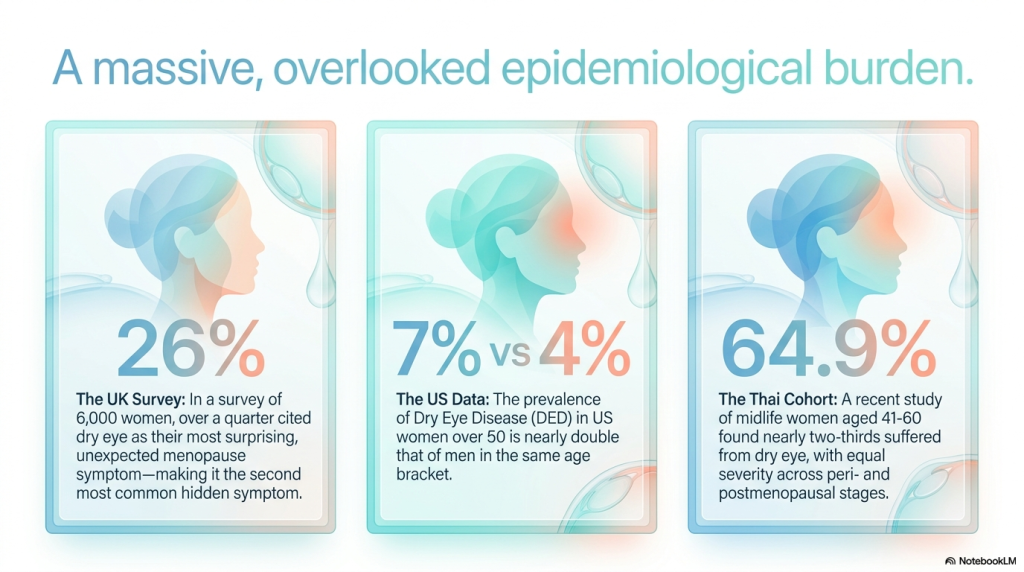
You're somewhere in your mid-forties to mid-fifties. You've started waking up with eyes that feel gritty, glued, or strangely tired before the day has even begun. Screens that you've used for twenty years suddenly feel hostile by mid-afternoon. Your contact lenses, if you wear them, have become unwearable. You've tried the supermarket drops and they don't really work.
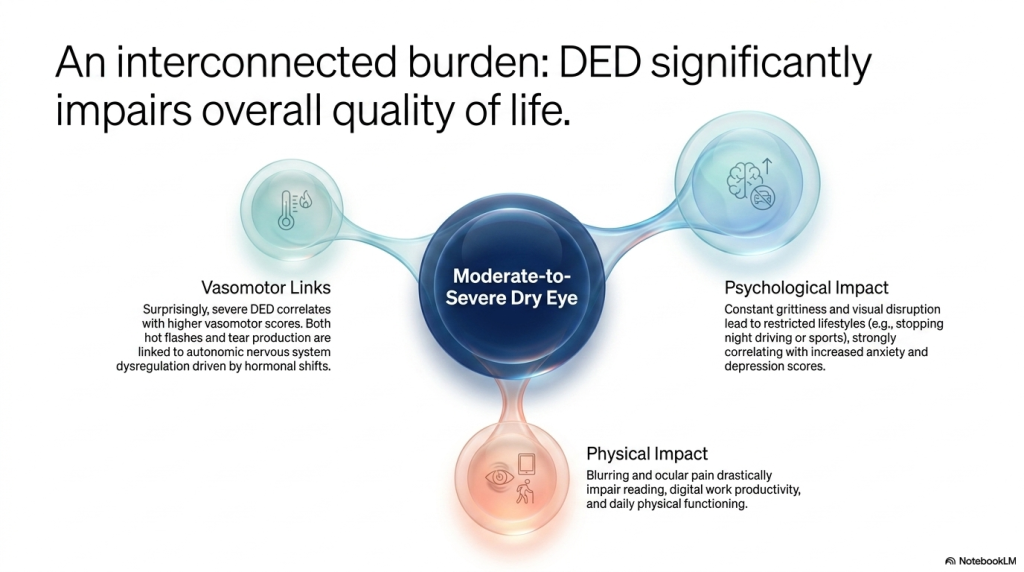
And here's the bit that nobody quite explains: it has all happened in the same eighteen-month window as the hot flushes, the broken sleep, the joint aches you can't account for, and the brain fog that arrives uninvited at 3pm.
That's not a coincidence. It's biology. And it now has a name doing the rounds in menopause circles: **inflammapause**.
What "inflammapause" actually means
The term is a popular shorthand, but the science underneath it is well established and peer-reviewed. Perimenopause and the years immediately following it are now recognised as a genuinely **pro-inflammatory life stage** — one of the most significant inflammatory shifts an adult body goes through.
What's happening is this. As ovarian hormone production winds down, the body loses a set of important regulatory signals. Oestrogen and progesterone don't only manage reproductive function — they also act as brakes on the immune system. When those brakes come off, the body's background inflammatory tone goes up. Studies have measured this directly in postmenopausal women: higher circulating levels of inflammatory messengers like TNF-alpha, IL-6 and IL-1 beta, expanded populations of "exhausted" immune cells, and activation of cellular machinery called the inflammasome that's normally kept quiet.
This is the same inflammatory shift now linked to the rise in cardiovascular risk after menopause, to changes in brain function, to visceral fat accumulation around the middle, and to the joint and muscle pain that so many women in their fifties are told is "just ageing."
The ocular surface is part of that same body. It does not get a special exemption.
Why dry eye is the canary in the inflammapause coal mine
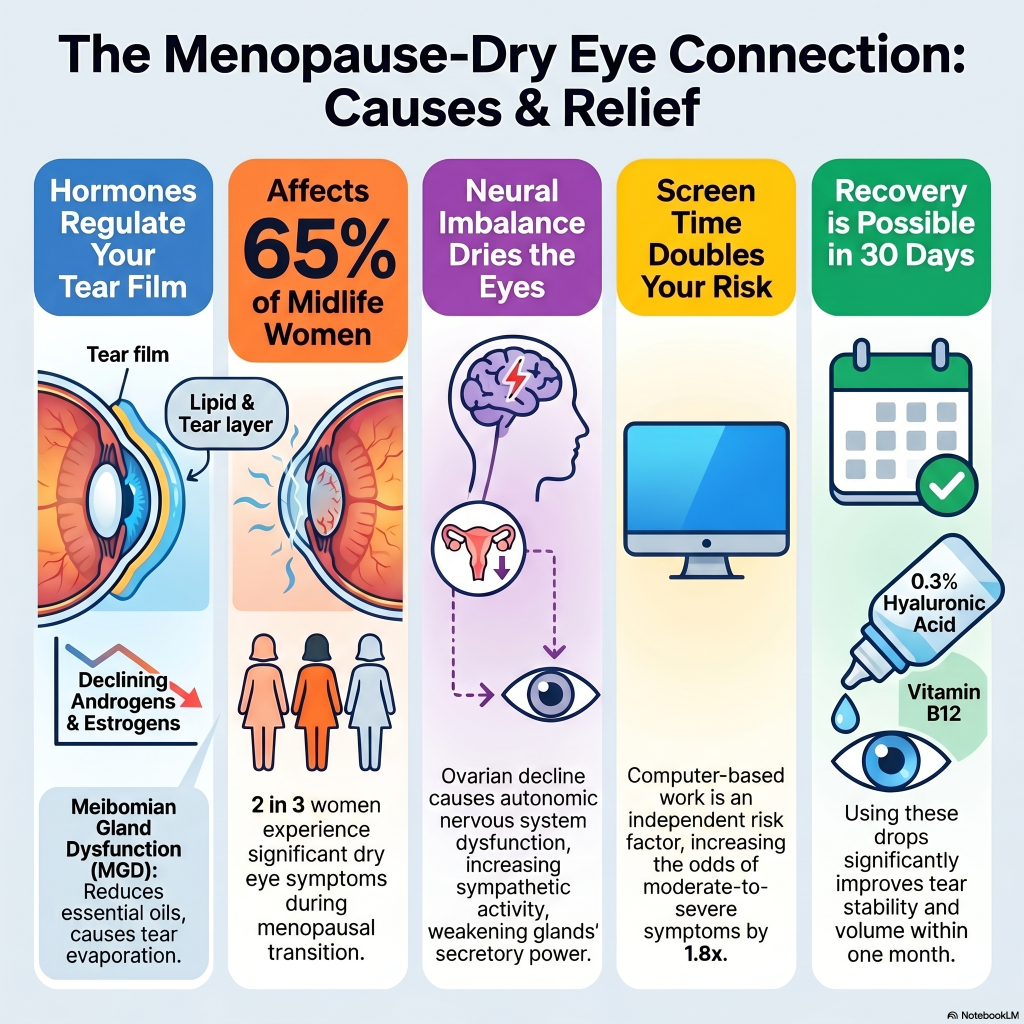
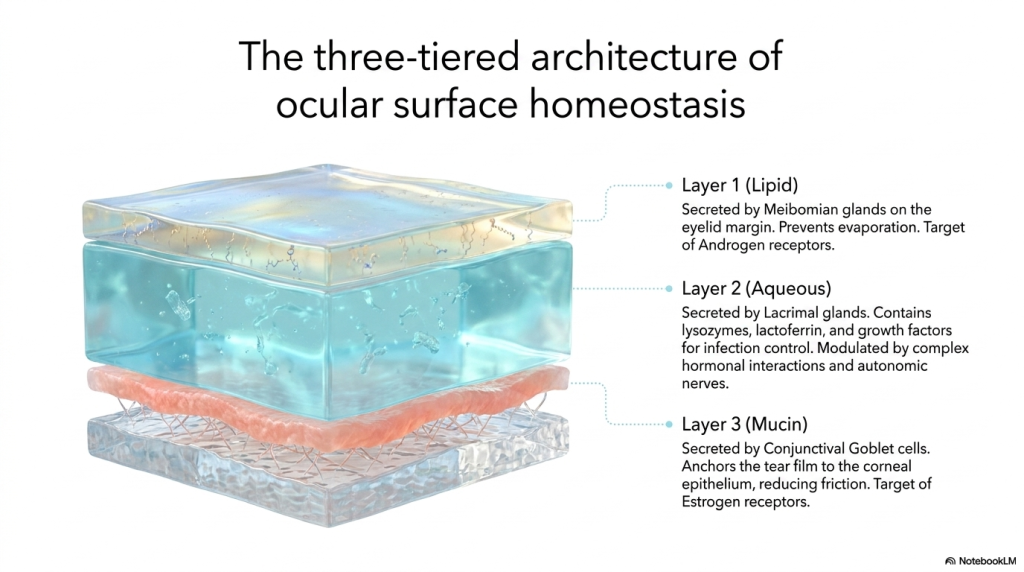
The front of the eye is one of the most hormonally sensitive surfaces in the body. The lacrimal glands that produce the watery layer of tears, the meibomian glands in the eyelids that produce the oil layer, and the cornea and conjunctiva themselves all carry receptors for oestrogen, progesterone and androgens.
Three things happen in parallel during the menopausal transition, and each one nudges the ocular surface closer to symptomatic dry eye:
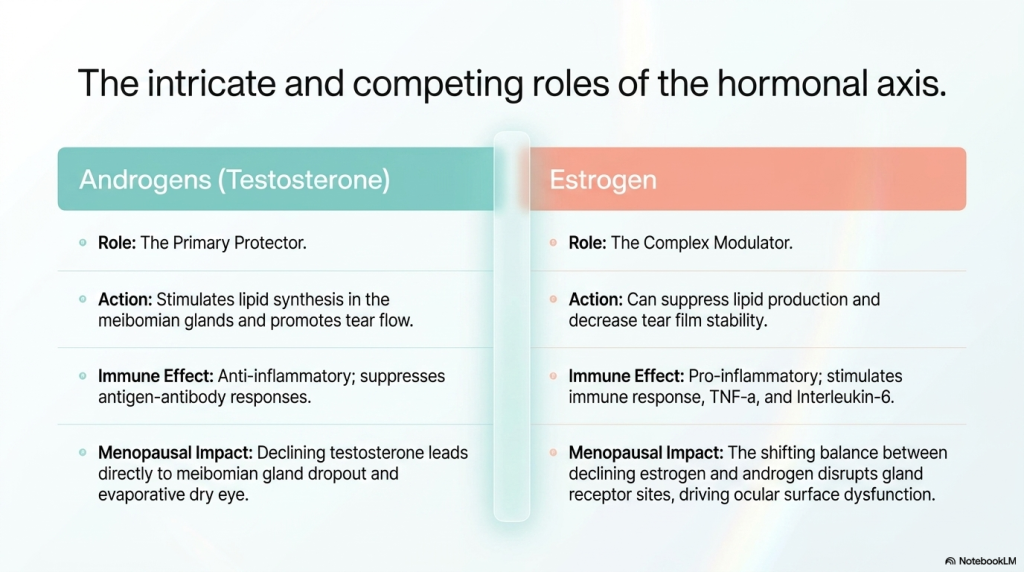
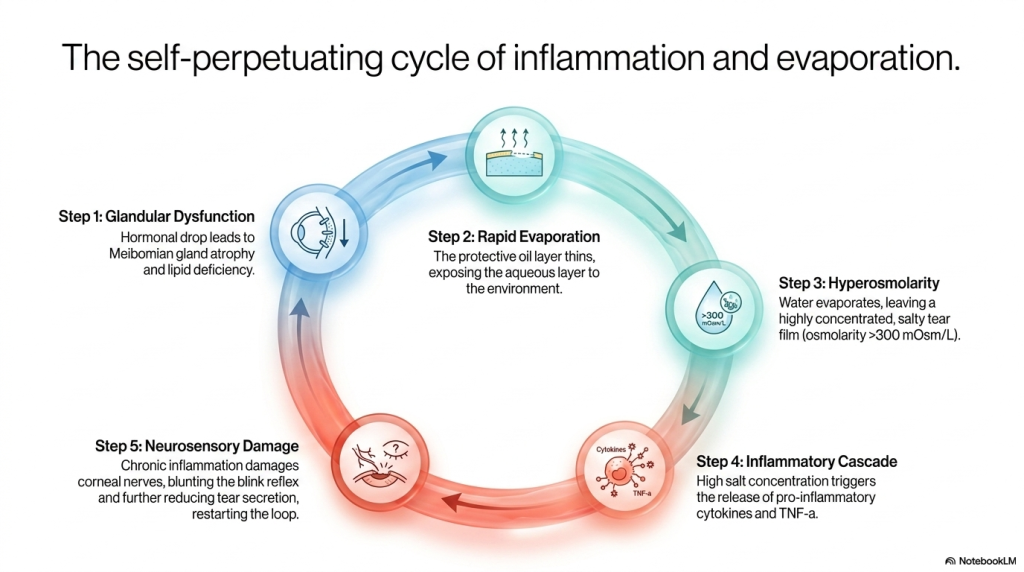
First, androgen levels fall. This is the big one and it's poorly understood by most people, including many clinicians. Androgens — yes, the same family as testosterone — are the dominant *protective* hormones for the meibomian glands. They keep the oil thin, clear, and flowing. As androgen levels decline through perimenopause and beyond, meibum thickens, the glands become less productive, and the tear film starts to evaporate faster than it can be replaced. This is why **meibomian gland dysfunction (MGD) becomes the dominant pattern of dry eye in women over fifty.
Second, the body's overall inflammatory tone rises. Even a tear film that was previously coping starts to fail when the surface it's sitting on is more reactive, more inflamed, and quicker to mount a response. The threshold at which a marginal tear film becomes a symptomatic problem drops. Symptoms appear that wouldn't have appeared five years earlier on the same tear volume.
Third, oestrogen's role becomes complicated. Unlike androgens, oestrogen's effect on the ocular surface is not straightforwardly protective. The research is genuinely mixed: some studies suggest oestrogen has anti-inflammatory effects, others suggest it can be pro-inflammatory at the ocular surface specifically. This matters because it explains something patients often find baffling — HRT does not reliably fix dry eye, and in some women it makes it worse**. We'll come back to that.
What this looks like in clinic
The pattern is recognisable once you know to look for it. A woman in her late forties or early fifties presents with:
- Symptoms that have come on over months, not years
- Worse symptoms in the morning, suggesting overnight evaporation
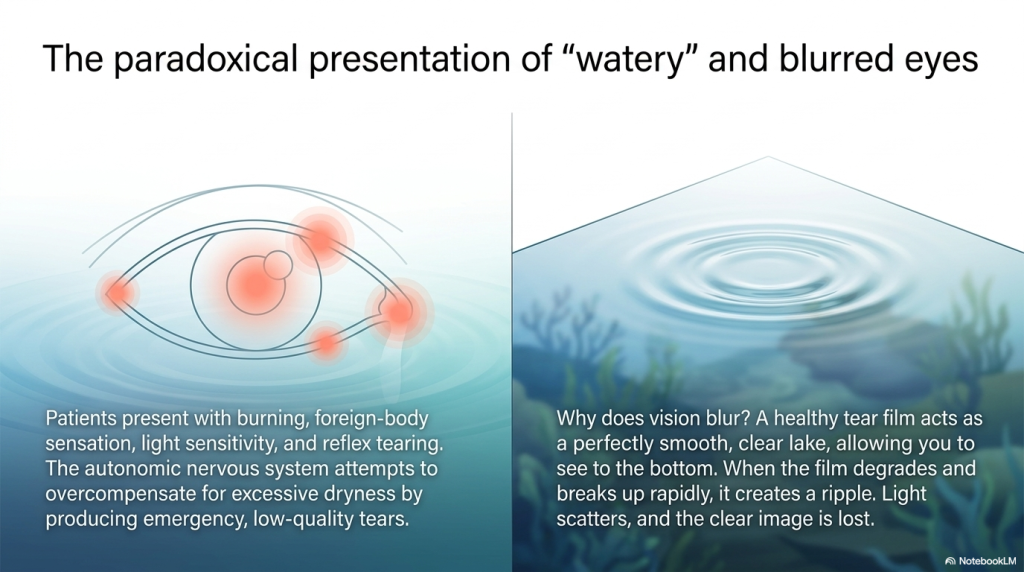
- A burning, gritty, or sandy feeling rather than a "watery" feeling
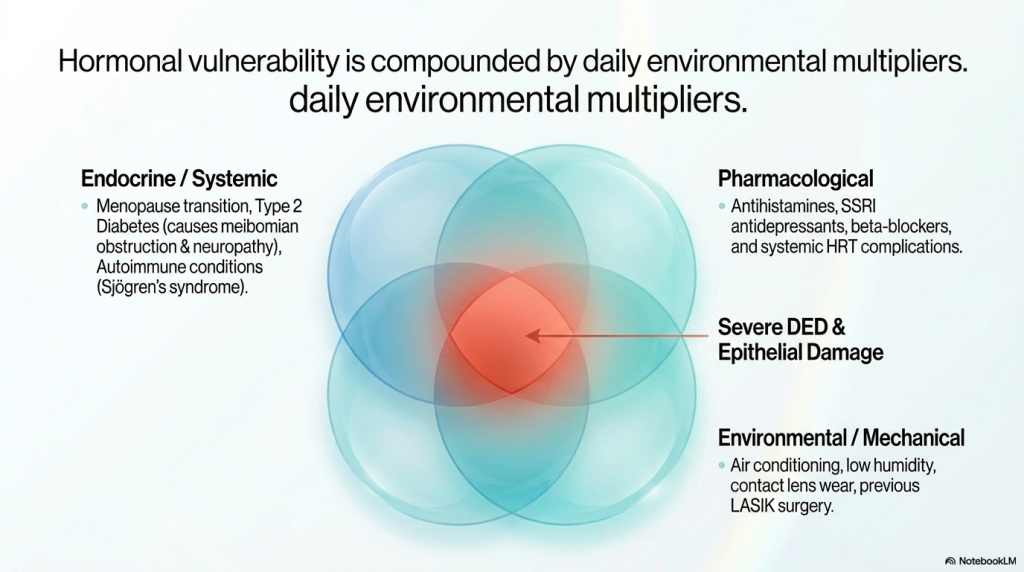
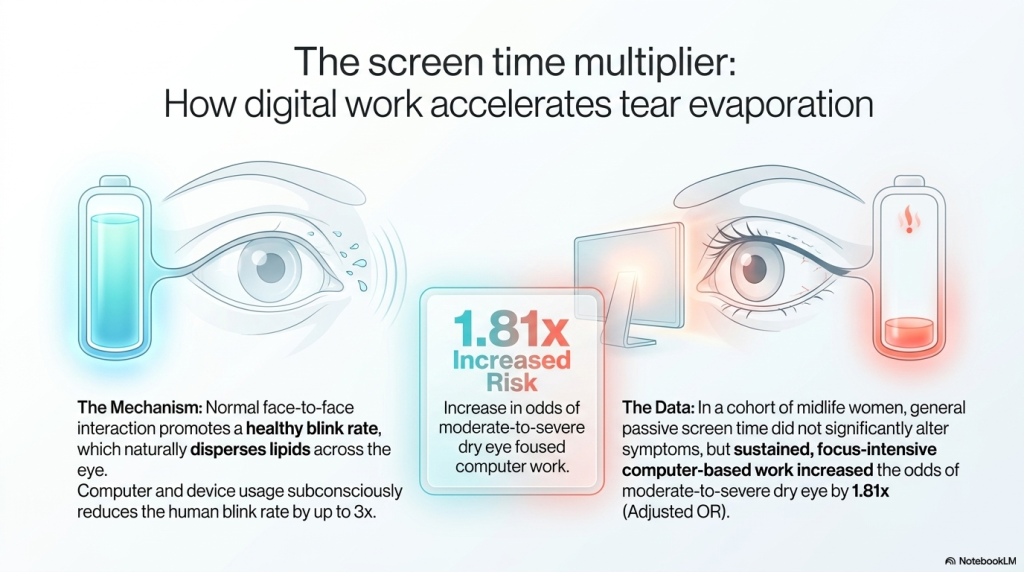
- Symptoms that flare with screens, air conditioning, wind, and heating
- Eyelid margins that look slightly thickened, with meibomian glands that don't express the clear oil they should
- Often, a tear break-up time well below the normal ten seconds
This is **evaporative dry eye driven by meibomian gland dysfunction**, layered on top of a body that's running hotter inflammatorily than it used to. It's not "just dry eye." It's the ocular signature of a wider physiological transition.
Where this story gets useful: the lifestyle changes do double duty
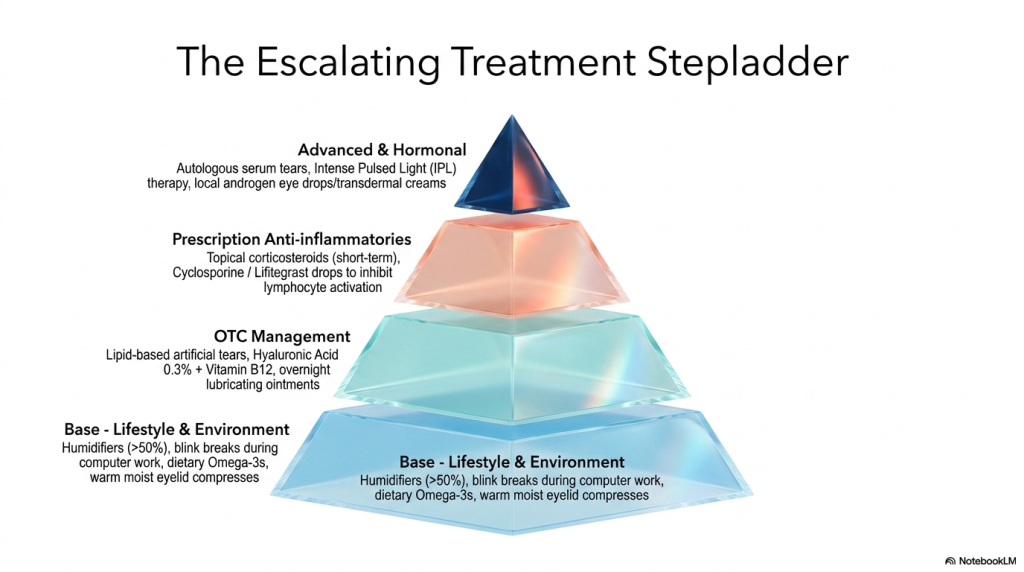
Here's the bit that makes inflammapause genuinely helpful as a framework rather than just a label. The evidence-based lifestyle interventions that lower systemic inflammation in the menopausal transition are **the same interventions** that improve tear film quality and meibomian gland function.
You are not running two parallel projects. You are running one.
Omega-3 fatty acids
The single most-studied dietary intervention for dry eye, and an established anti-inflammatory across the body. Oily fish twice a week (salmon, mackerel, sardines, herring) is the foundation. For meibomian gland disease specifically, a higher-dose supplement — typically around 2,000mg of combined EPA and DHA daily — has clinical evidence behind it. The evidence isn't perfect, and the landmark DREAM trial muddied the waters, but in patients with confirmed evaporative dry eye, omega-3 supplementation remains a sensible part of the picture and supports cardiovascular health alongside it.
Mediterranean-style eating
Polyphenol-rich, vegetable-heavy, olive oil-based eating is the most consistently anti-inflammatory dietary pattern in the literature. It lowers CRP, IL-6 and other inflammatory markers, reduces visceral fat, and supports the gut microbiome — which itself is an emerging factor in ocular surface inflammation. This is not a diet you need to "go on." It is a direction of travel: more plants, more colours, more olive oil, less ultra-processed food, less refined sugar.
Glycaemic control
Blood sugar spikes drive inflammation. Insulin resistance — which becomes more common after menopause as visceral fat accumulates — drives more. Eating in a way that keeps blood sugar steadier (protein and fibre with each meal, fewer liquid sugars, less snacking on refined carbohydrates) reduces the inflammatory drumbeat that the ocular surface is sitting on top of.
Hydration with electrolytes, not just volume
Tears are not just water. The osmolarity of the tear film — the salt concentration — is a key driver of ocular surface damage. Drinking enough water matters, but so does adequate sodium, potassium and magnesium intake, particularly for women experiencing hot flushes who are losing more through skin than they realise.
Sleep, exercise, stress
Poor sleep raises inflammation. Sedentary time raises inflammation. Chronic stress raises inflammation. None of these are dry eye treatments in themselves, but each one is a lever on the underlying inflammatory state that dry eye is now part of. Resistance training in particular has emerged as one of the most effective non-pharmacological interventions for the menopausal transition, with metabolic and inflammatory benefits that extend to the ocular surface.
What to be cautious about
"Hot showers and direct heat to the face", which patients often gravitate to for warmth, can worsen evaporative dry eye and trigger rosacea-pattern lid disease.
"Alcohol", even at modest levels, is increasingly recognised as both pro-inflammatory and a direct ocular surface irritant. Many women in perimenopause notice a marked worsening of eye symptoms the day after drinking.
"Vaping and smoking" are direct ocular surface insults and the inflammatory cost is high.
And what about HRT?
This is the question that comes up in every consultation and it deserves an honest answer rather than a marketing one.
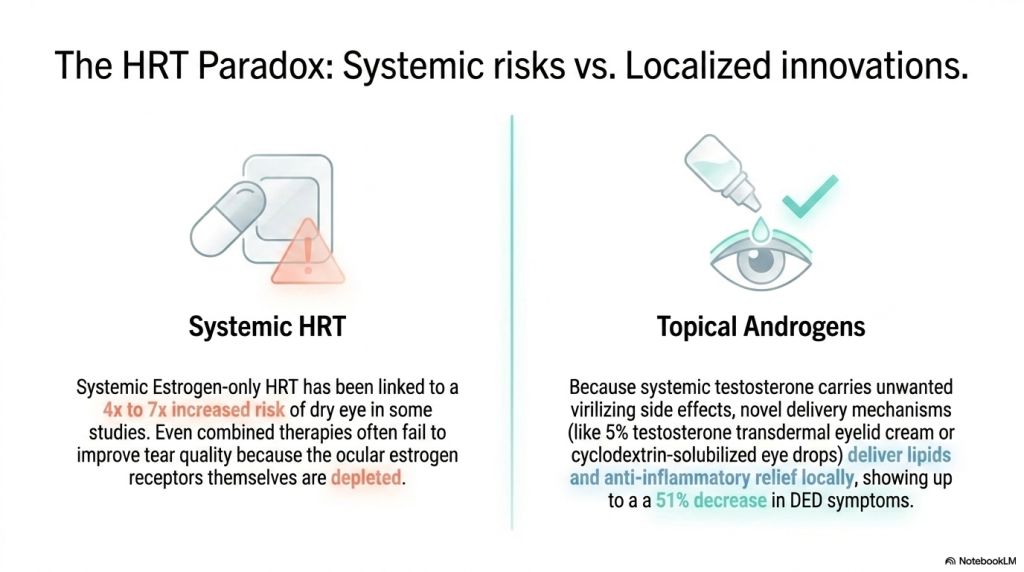
Hormone replacement therapy is a legitimate and often life-changing treatment for menopausal symptoms, and for many women the benefits across cardiovascular, bone, cognitive and quality-of-life domains are substantial. **But HRT is not a reliable treatment for dry eye. The published evidence is mixed and includes studies showing that some women on oestrogen-containing HRT actually experience *worsened* dry eye symptoms — possibly four to seven times more likely in some analyses.
This does not mean you shouldn't take HRT. It means HRT decisions belong with your GP or menopause specialist and should be made on the basis of your wider menopausal picture — vasomotor symptoms, bone health, cardiovascular risk, sleep, mood — not on the basis of your eyes. If you are already on HRT and your dry eye symptoms have improved, brilliant. If they've worsened, that's a known phenomenon and worth flagging to whoever prescribes it.
What we can offer at the practice
The lifestyle work above does most of the heavy lifting in mild and moderate cases. For evaporative dry eye driven by meibomian gland dysfunction — which, as discussed, is the dominant pattern in this age group — there is also a well-established clinical pathway that I deliver personally at the practice:
**Diagnostic workup** to characterise exactly what type of dry eye you have, including meibomian gland imaging, tear break-up time, ocular surface staining, and a structured symptom assessment.
In-clinic treatments including Intense Pulsed Light (IPL) and Low-Level Light Therapy (LLLT) delivered through the eye-light® platform — both of which have clinical evidence for treating the inflammatory component of meibomian gland disease and improving gland function. I have used both of these treatments on myself, which has shaped how I deliver and explain them.
Lid hygiene protocols including NuLids home care device for daily gland expression.
These are not "instead of" the lifestyle changes. They work alongside them. The lifestyle changes lower the inflammatory floor; the in-clinic treatments address the structural gland dysfunction that's accumulated on top of it.
The takeaway
The eye symptoms you're noticing in perimenopause are not in your head, not just "dry eyes," and not something to be quietly tolerated. They are part of a wider physiological transition — inflammapause — that the medical world is only now starting to talk about properly.
The good news is that the same changes that help your joints, your heart, your sleep, your weight and your brain through this transition will also help your eyes. And for the structural gland damage that lifestyle alone cannot reverse, there are now genuinely effective in-clinic treatments that didn't exist a decade ago.
If your eyes have changed and you don't know why, the answer is rarely "nothing can be done." It's usually that nobody has yet looked properly.
---
**Steve Dando MCOptom**
Principal Optometrist and Clinical Director
Professional Certificate in Glaucoma | Professional Certificate in Medical Retina
Openshaw Opticians, Unit 4, 16 Cheapside, Cleckheaton, BD19 5AF
01274 878214 | dryeyeyorkshire.co.uk